 English
 русский
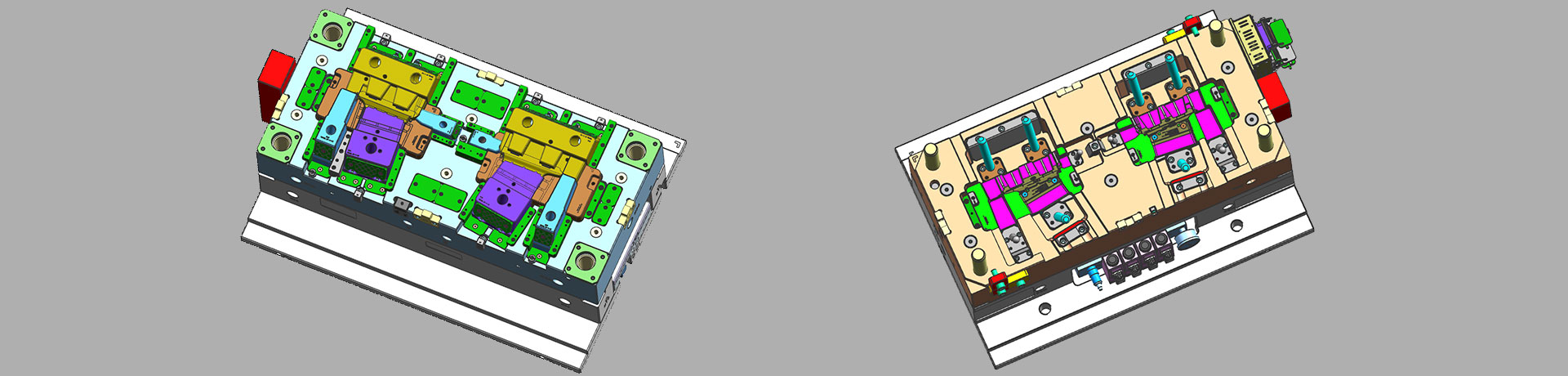
Plastic injection mold heating
When the plastic injection molding process requires the mold temperature to be above 80°C, a temperature adjustment system with heating function must be provided in the mold. In addition, thermoplastic injection molding often needs to heat the mold before molding in the cold winter, because if the weather is too cold, the molten plastic has solidified before being injected into the mold and cannot fill the entire cavity. Thermosetting molds also need heating, heat retention, and pressure retention during the molding process to solidify the raw materials, the mold processing bakelite and the dry press mold for processing Gabu epoxy resin do not have a gating system aggregate, but they need to be heated.
The heating methods of the mold include: hot water, hot oil, steam, resistance heating pipe, etc.
Water and oil heating method:
The hot water, hot oil, and steam is also used to heat the mold through the cooling channel in the mold, the mold structure and design principles are exactly the same as the cooling water channel, the use of hot water and hot oil to heat the mold requires supporting equipment, a mold temperature controller, which is widely used in injection molds, and its main functions are as follows:
1. Improving the molding efficiency of plastic parts;
2. Reducing the production of defective products;
3. Improving the appearance quality and reduce the defective of plastic parts;
4. Increasing the production speed, reduce energy consumption and save energy.
There are two types of mold temperature controllers: water and oil mold temperature controllers (see picture 1 and picture 2).
Features of water temperature controller:
1. The operating temperature range is 40-180℃, accurate to ±1℃;
2. Simple computer touch control operation;
3. Automatic venting;
4. There are display of outlet water and return water temperature;
5. Stainless steel pipes to reduce pipe resistance and rust;
6. The failure is displayed, and the maintenance does not require professionals.
Features of oil temperature controller:
1. The temperature controller adopts touch-type internal storage, automatic calculation, accurate and reliable, and can be controlled within ±2℃, saving more than 35% of electricity;
2. Two sets of electric heating pipes can be used individually or together;
3. The heating and cooling time is fast, and the temperature is stable;
4. The electric heating pipe is made of stainless steel;
5. Perfect safety protection and failure indication system;
6. Imported high-grade components are used, and long service life;
7. Easy to operate and maintain.

water temperature controller
.png)
oil temperature controller

The design requirements of slider wear plate
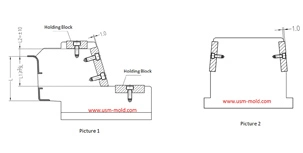
Jan 2, 20241. The wear plate of slider requires hardening treatment, with a hardness of 45-48HRC; 2. The friction surface of the wear plate is required to be 1.0mm higher than the slider surface (see picture-1);...view
The principle of mold temperature balance in plastic mold cooling system design
Feb 21, 2022The principle of mold temperature balance: 1. Due to the complexity of the plastic parts and mold structure, it is difficult to make the temperature of the mold completely consistent, but should be...view
Design standard of exhaust slot
Mar 3, 2022The exhaust system should ensure that the gas in the cavity is smoothly discharged, and also prevent the material from entering and exhausting channels from causing flashing of the product or blockage...view
Five Major Steps of the Injection Mold Production Process
Dec 9, 2021Injection mold manufacturing can be roughly divided into the following steps: Process analysis of plastic products. Before the mold design, the designer should fully analyze and study whether the...view
Unique Solutions Mold Profile
Dec 27, 2021USM (UNIQUE SOLUTIONS MOLD LIMITED) was founded in 2012 and is located in Dongguan City, Guangdong Province, a famous mold manufacturing province in China, the plant covers an area of 3500 square...view_20250317091113A018.jpg)
The basic points of designing gas-assisted injection molding
Apr 17, 20221. Firstly, considering the suitable wall thickness areas needs to be injected and hollowed out, and then decide how to connect them with the gas channel; 2. The gas channel should be arranged in...view