 English
 русский
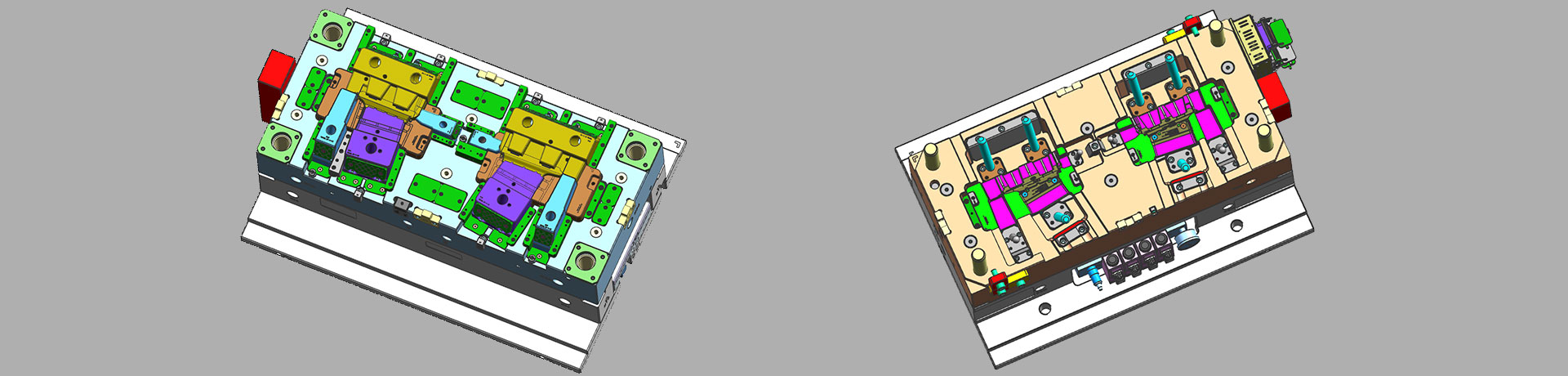
Plastic injection mold heating
When the plastic injection molding process requires the mold temperature to be above 80°C, a temperature adjustment system with heating function must be provided in the mold. In addition, thermoplastic injection molding often needs to heat the mold before molding in the cold winter, because if the weather is too cold, the molten plastic has solidified before being injected into the mold and cannot fill the entire cavity. Thermosetting molds also need heating, heat retention, and pressure retention during the molding process to solidify the raw materials, the mold processing bakelite and the dry press mold for processing Gabu epoxy resin do not have a gating system aggregate, but they need to be heated.
The heating methods of the mold include: hot water, hot oil, steam, resistance heating pipe, etc.
Water and oil heating method:
The hot water, hot oil, and steam is also used to heat the mold through the cooling channel in the mold, the mold structure and design principles are exactly the same as the cooling water channel, the use of hot water and hot oil to heat the mold requires supporting equipment, a mold temperature controller, which is widely used in injection molds, and its main functions are as follows:
1. Improving the molding efficiency of plastic parts;
2. Reducing the production of defective products;
3. Improving the appearance quality and reduce the defective of plastic parts;
4. Increasing the production speed, reduce energy consumption and save energy.
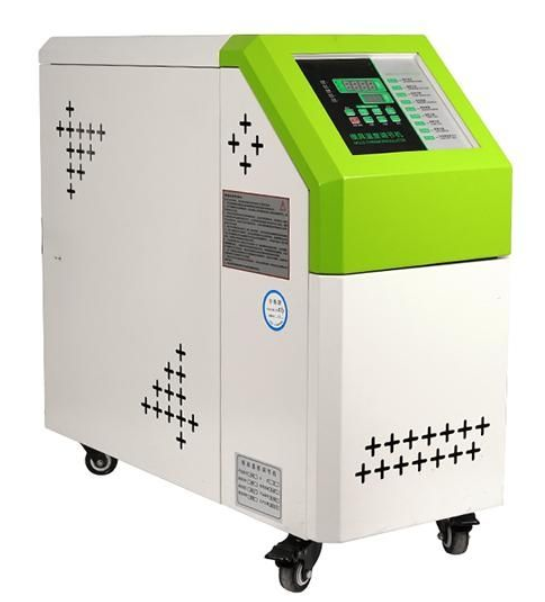
There are two types of mold temperature controllers: water and oil mold temperature controllers (see picture 1 and picture 2).
Features of water temperature controller:
1. The operating temperature range is 40-180℃, accurate to ±1℃;
2. Simple computer touch control operation;
3. Automatic venting;
4. There are display of outlet water and return water temperature;
5. Stainless steel pipes to reduce pipe resistance and rust;
6. The failure is displayed, and the maintenance does not require professionals.
Features of oil temperature controller:
1. The temperature controller adopts touch-type internal storage, automatic calculation, accurate and reliable, and can be controlled within ±2℃, saving more than 35% of electricity;
2. Two sets of electric heating pipes can be used individually or together;
3. The heating and cooling time is fast, and the temperature is stable;
4. The electric heating pipe is made of stainless steel;
5. Perfect safety protection and failure indication system;
6. Imported high-grade components are used, and long service life;
7. Easy to operate and maintain.
water temperature controller
.png)
oil temperature controller
_20250310164515A048.webp "Touch Switch Sensor Mold")
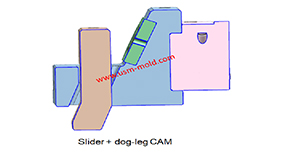
Classification of side parting and core pulling mechanism
Jul 17, 2022According to the structural characteristics of plastic moulding, the side core-pulling mechanisms are divided into the following six categories: 1. The side core-pulling mechanism of "slider + guide...view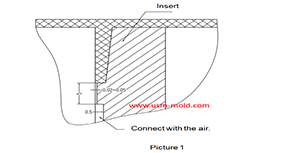
Venting insert design of molded parts
Mar 13, 2022In the thin-walled cavity, the end of the melt flow, the bottom of the blind hole of the mold cavity, the end of the solid column of the plastic part, the bottom of the plastic part rib and screw...view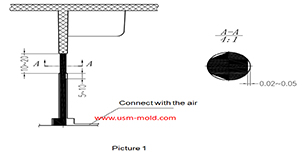
Insert pin of vengting design for molded parts
Mar 20, 2022Insert pin of venting: It is difficult to make exhaust slot when end runner is not in parting surface during injection, and there is no matching gap available, but we could make the venting pin at end...view
Design principle of plastic injection mold cooling system
Feb 13, 2022Design principle of cooling system In order to improve the efficiency of the cooling system and make the cavity surface temperature distribution even, the following principles should be followed in...view
Key points of plastic injection mold runner system
Jan 12, 2022The sub-runner is a transitional channel between the main runner and the gate, as the sub-runner is the longgest part of gating system, so it is very important to enhance the parts quality and improve...view
Pin-point gate of plastic injection mold runner system design
Jan 24, 2022In order to get the best injection quality, the gate type must be selected carefully, the coommon gate tyeps are: direct gate, side gate, pin-point gate, sub gate,valve gate of hot runner etc. Among...view